Plant & Excavator Hire in Cairns
Equipment hire for earthworks, site prep and construction support.
Reliable Equipment, Ready to Perform
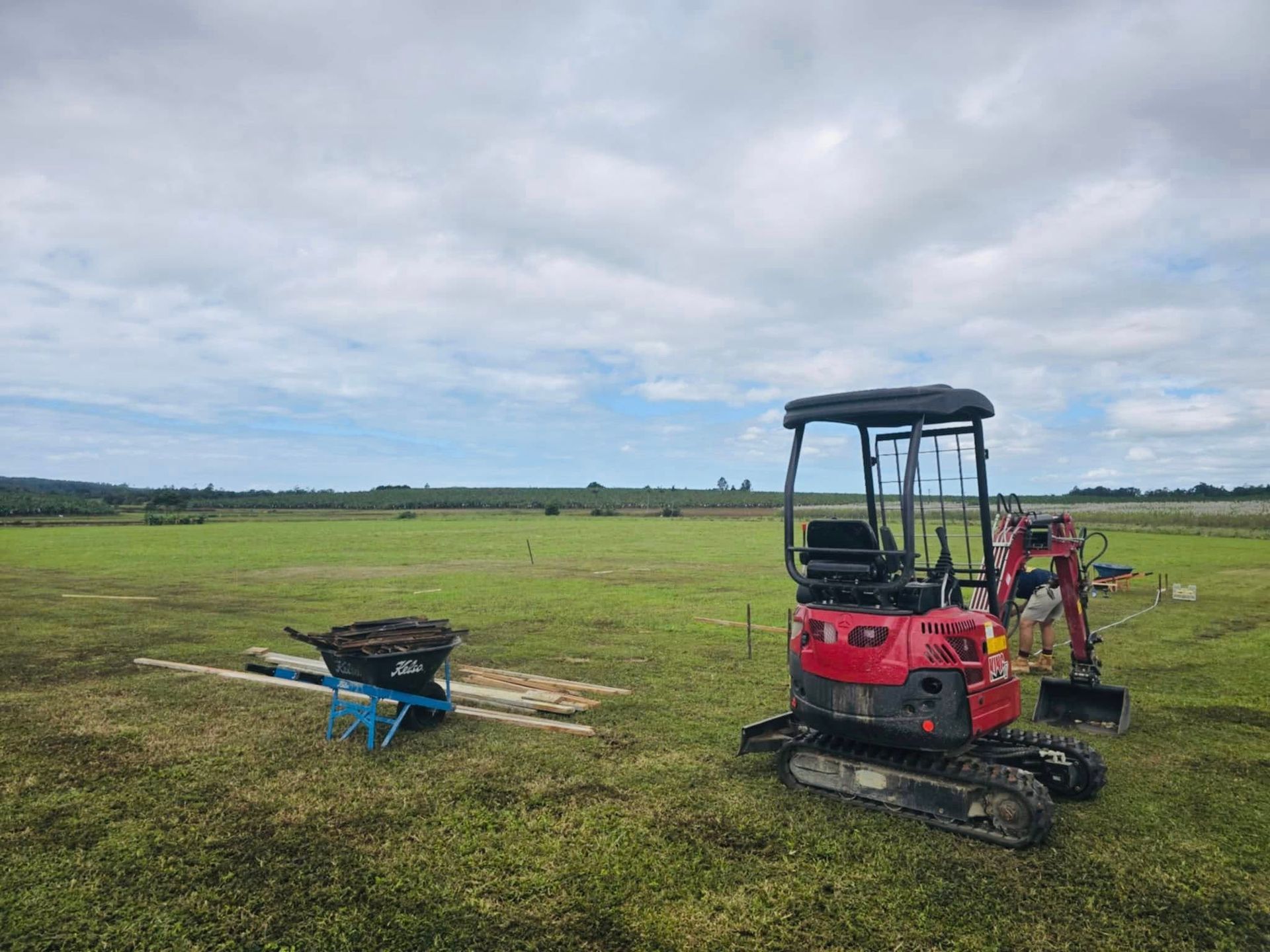
For efficient earthmoving and site preparation, Sun Co Concrete And Construction offers 1.7 tonne excavator hire with a full range of attachments. Servicing Cairns, Mareeba, Dimbulah, Atherton and the Tablelands, we support builders, trades and property owners with dependable equipment and experienced operators for jobs of all sizes.
Our excavator hire services cover detailed earthworks, site cuts, trenching and preparation for concrete slabs, driveways and more. Whether you're starting civil works or preparing a site for a new home or commercial foundation, we ensure every job is completed to a professional standard.
To arrange flexible excavator hire with a team you can trust, contact Sun Co Concrete And Construction on 0412 284 408.
Why Locals Choose Us
We bring practical equipment, precision and a strong work ethic to every project:
- Our 1.7 tonne excavator is available with all necessary attachments for versatile on-site use.
- We complete earthworks and site cuts with attention to levels, access and future building requirements.
- Our plant hire is ideal for slab prep, trenching, drainage and general construction groundwork.
- Each job is approached with care to avoid delays, rework or costly oversights.
- We service residential and commercial clients across Mareeba and the broader Tablelands region.
- Tight-access sites are no problem thanks to our compact, highly manoeuvrable equipment.
- Operator support is available to ensure safety and productivity from start to finish.
- Competitive hire rates and free quotes make planning simple and transparent.
Get in touch with Sun Co Concrete And Construction to secure your excavator hire and start your groundwork with confidence.
Licensed & Insured
Quality Craftsmanship
End-to-End Solutions
Get a Free Quote
Enter your details and we'll get back to you as soon as possible.
Contact Us
Thank you for contacting Sun Co Concrete And Construction.
We will get back to you as soon as possible.
Please try again later.
FAQ
How do you choose the right excavator size for a job?
Choosing the right excavator size depends on access, ground conditions and the volume of material that needs moving. Smaller excavators suit tight spaces, residential yards and areas with limited clearance. Larger machines suit bulk excavation, deeper trenching and bigger sites where productivity matters. The attachment selection also influences suitability, as buckets, augers and trenching tools change how the machine performs. Ground stability and slope can affect what equipment can operate safely. Over-sizing can cause unnecessary disturbance to the site, while under-sizing can make the job slower and less efficient. Matching machine size to the work helps improve accuracy, reduce disruption and keep tasks moving steadily.
What is the difference between dry hire and wet hire?
Dry hire generally means hiring machinery without an operator, while wet hire includes an operator supplied with the equipment. Dry hire is often suitable when the hirer has the right licences, experience and capability to operate machinery safely. Wet hire can be useful when the job needs specialised skill, the site has constraints or the hirer wants to reduce risk and improve efficiency. Wet hire may also help streamline work because the operator understands how to use attachments correctly and work to required levels or falls. The best option depends on experience, the complexity of the task and safety considerations. Understanding site responsibilities is important under either arrangement.
What preparation should be done before excavation begins?
Before excavation begins, it is important to identify underground services such as electrical, water, gas and communications. Marking boundaries and confirming excavation areas helps avoid mistakes and rework. Site access should allow safe entry and movement for machinery, with clear haul routes if spoil removal is required. Ground conditions, slope and drainage also affect how excavation should be approached. Establishing safe work zones, keeping bystanders clear and considering nearby structures helps reduce risk. Planning for spoil placement, backfilling material and compaction requirements supports a smoother job. When preparation is thorough, excavation work tends to progress faster, with fewer interruptions and less chance of damage.